



|
Celebrating 25 years delivering DNA and RNA purification solutions! |
$0.00 – $2,675.20Price range: $0.00 through $2,675.20
CE-IVD marked kit is available: Mag-Bind® cfDNA Kit CE IVD – (omegabiotek.com)
All Mag-Bind® kits can be automated on most programmable robotic platforms, liquid handlers or magnetic processors. Learn more.
Off-the-shelf product doesn’t suit your needs? We’ll work with you to develop a customized product. Learn more.
Dedicated applications support will consult with you to develop and implement an automated solution that fits your specifications. Learn more.
Scripts available for all Mag-Bind® Kits for most open liquid handlers and common magnetic processors including the MagBinder® Fit24. Visit Automated Solutions for more information.
The Mag-Bind® cfDNA Kit is designed for rapid and reliable isolation of circulating cell-free DNA from 1-4 mL plasma/serum and urine samples. The Mag-Bind® cfDNA Kit can be processed manually with 15 mL centrifuge tubes or on automated platforms with appropriate plasticware. The procedure eliminates the need for funnels and vacuum steps providing hands-free operation in automated protocols.
The uniquely formulated binding buffer from Omega Bio-tek allows for large sample volumes to be processed in automated formats with 4 mL plasma/serum or urine being processed in a 24-well plate. The magnetic properties of the Mag-Bind® Particles CH enable fast magnetic separation, especially during steps involving large volumes. The high-binding capability decreases the amount of magnetic particles required thereby reducing the elution volume; up to 4 mL serum/plasma or urine can be eluted in 50 µL.
The system combines the reversible nucleic acid-binding properties of Mag-Bind paramagnetic particles with a unique binding system that targets smaller DNA fragments (150-400 bp) and minimizes the binding of larger fragments, such as gDNA.
Note: Up to 10 mL sample input volumes can be processed using this kit. Please contact your Omega Bio-tek representative for protocol details.
This Kit can be automated on most open liquid handlers or magnetic processors. Ready-to-implement protocols are available for the following platforms:
For Research Use Only. Not for use in diagnostic procedures.
| FEATURES | SPECIFICATIONS |
|---|---|
| Sample Type | Plasma, Serum, Urine |
| Sample Volume | Up to 10 mL |
| Technology | Magnetic Beads |
| Processing | Manual or Automated |
| Automatable | Yes |
| Processing Time | 2 hours for 96 (1mL) samples |
| Format | Tube, 24-well, 96-well |
| Elution Volume | 50 µL |
| ITEM | AVAILABLE SEPARATELY |
|---|---|
| Mag-Bind® Particles CH | Call for Pricing |
| DS Buffer | Call for Pricing |
| JSB Buffer | View Product |
| GT7 Buffer v1.1 | Call for Pricing |
| SPW Buffer | View Product |
| Elution Buffer | View Product |
| Proteinase K Solution | View Product |
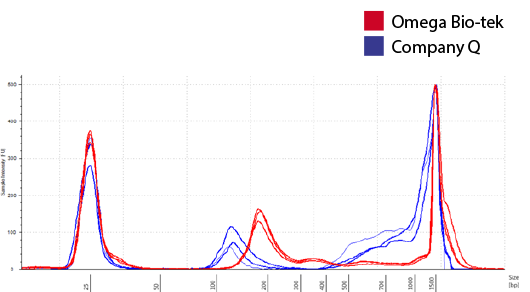
Figure 1. Electropherogram overlay of purified DNA from 4 mL serum. 4 mL of unspiked serum was purified using kits from Omega Bio-tek and Company Q following manufacturer’s recommended protocols. Purified DNA was analyzed on Agilent’s TapeStation® 2200.
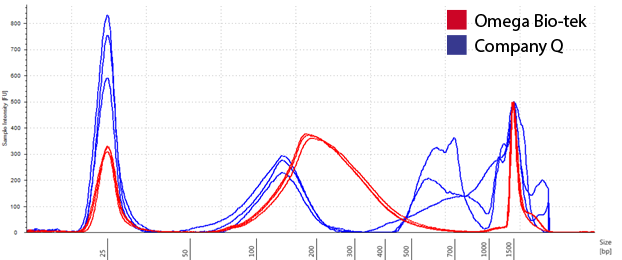
Figure 2. Electropherogram overlay of purified DNA from 1 mL serum. Sheared, bacterial DNA was spiked into serum samples and isolated using Omega Bio-tek’s Mag-Bind cfDNA Kit and a column-based kit from Company Q. Real-time PCR was performed using 16s bacteria-specific primers at 1X and 10X dilutions. Purified DNA was analyzed on Agilent’s TapeStation® 2200. The Omega Bio-tek kit was able to capture the circulating, cell-free DNA with no genomic DNA contamination. In contrast, Company Q’s eluate contained high molecular weight fragments indicating the presence of genomic DNA in the circulating DNA isolation.
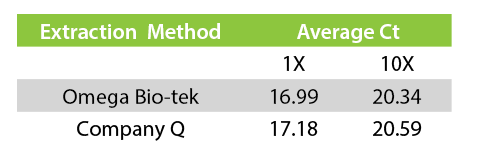
Table 1. Real-time PCR with 16S bacterial-specific primers was performed on triplicates of undiluted and 10-fold dilutions of DNA isolated from samples purified [figure 2]. The data shows the purified DNA is free of PCR inhibitors and the specific cfDNA concentration is higher than Company Q.
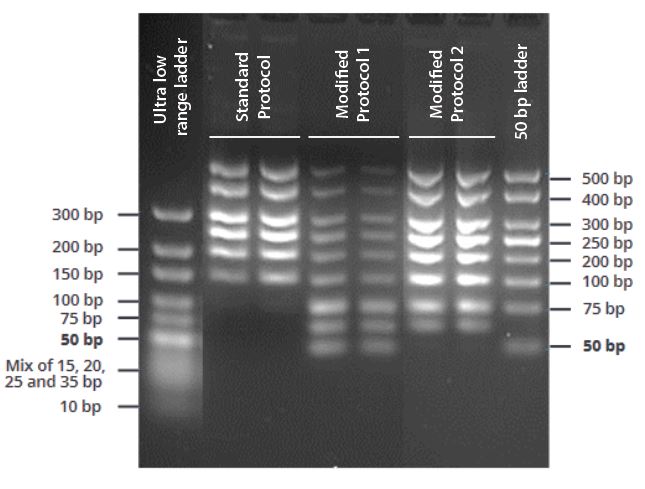
Figure 3. DNA fragments as small as 50 bp can be recovered using modified protocol. Serum spiked with 50 bp DNA ladder was purified with the Mag-Bind® cfDNA Kit. By using modified protocols, smaller fragments were recovered.
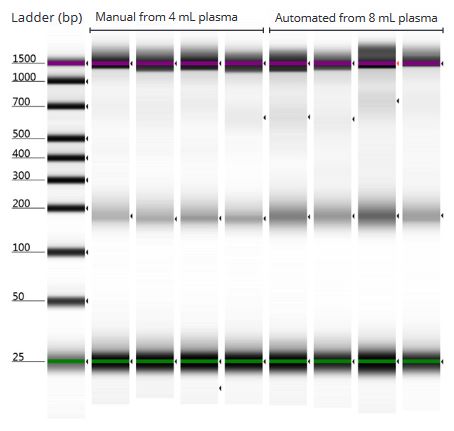
Figure 4. TapeStation® analysis of cfDNA purified manually from 4 mL of unspiked plasma, as well as from 8 mL of unspiked plasma samples using Omega Bio-tek’s kit automated on Hamilton Microlab® STAR™ platform.
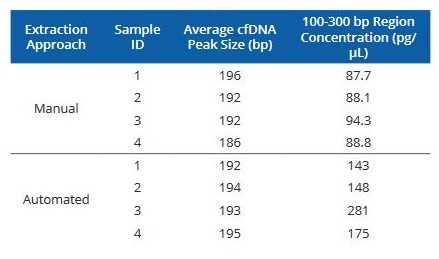
Table 2. Gel image from figure 4.1 was analyzed using the TapeStation software. Peak and concentration data showed that 8 mL automation process was a success.
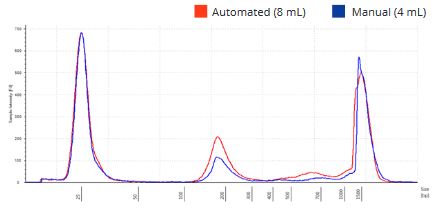
Figure 5. Gel image from figure 4.1 was analyzed using the TapeStation software. Peak and concentration data showed that 8 mL automation process was a success.
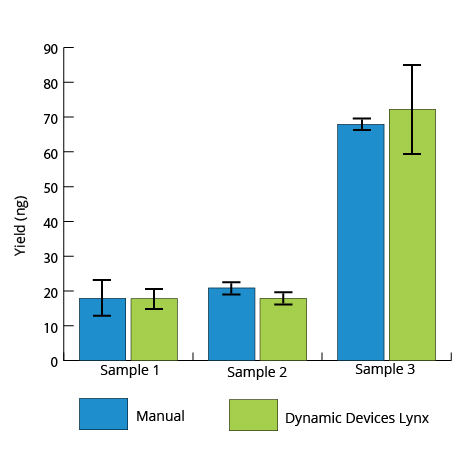
Figure 6. cfDNA was extracted from 10 mL plasma using the Dynamic Devices’ Lynx, as well as manual methods. Yield values were comparable between extraction methods.
| Sample | Manual | Dynamic Devices Lynx | ||||
|---|---|---|---|---|---|---|
| 2 µL | 6 µL | ΔCt | 2 µL | 6 µL | ΔCt | |
| 1 | 29.12 ± 0.33 | 28.27 ± 0.38 | -0.85 | 29.28 ± 0.48 | 27.73 ± 0.50 | -1.55 |
| 2 | 29.51 ± 0.28 | 28.27 ± 0.10 | -1.24 | 29.64 ± 0.17 | 28.22 ± 0.16 | -1.42 |
| 3 | 28.39 ± 0.30 | 27.73 ± 0.37 | -0.67 | 28.52 ± 0.25 | 26.96 ± 0.14 | -1.56 |
Figure 7. cfDNA was extracted from 10 mL plasma using the Dynamic Devices’ Lynx, as well as manual methods. The extracted cfDNA was subjected to qPCR to evaluate its suitability downstream. The ΔCt’s for the cfDNA extracted using the Lynx were ~1.5, indicating minimal inhibition, while the manually extracted cfDNA exhibited signs of inhibition.
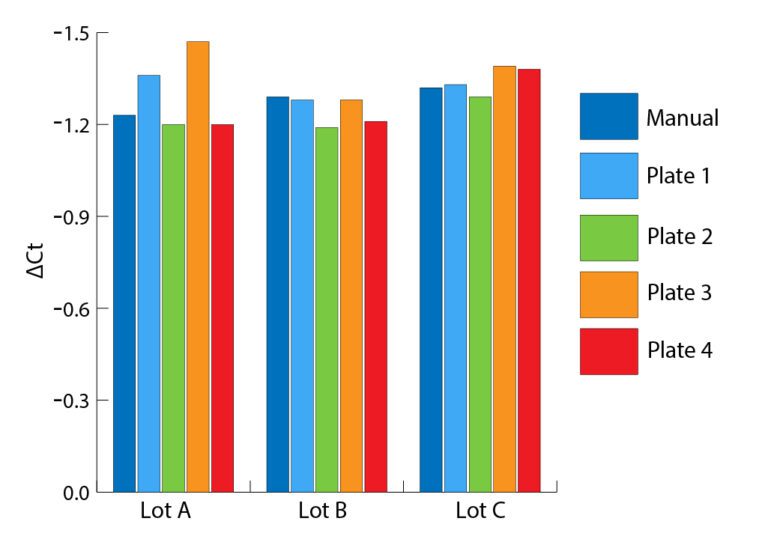
Figure 8. Cell-free DNA (cfDNA) was extracted from three 4 mL aliquots sampled from three lots of human-derived plasma using the Mag-Bind® cfDNA Kit. Purification was automated across 4 plates on the Hamilton Microlab® STAR™, as well as performed manually following manufacturer’s instructions. qPCR analysis was performed on the extracted cfDNA to determine its suitability for use downstream.
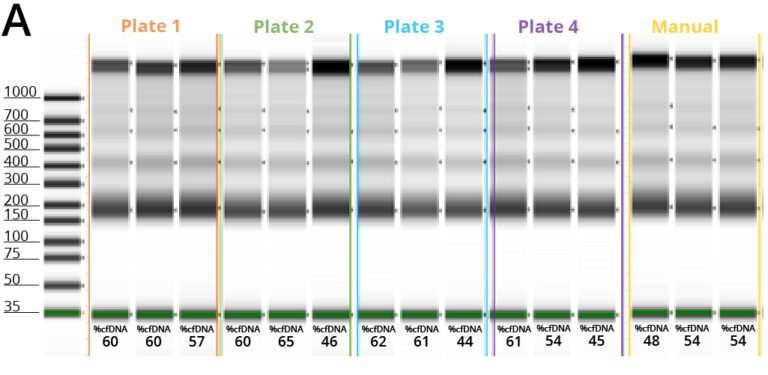
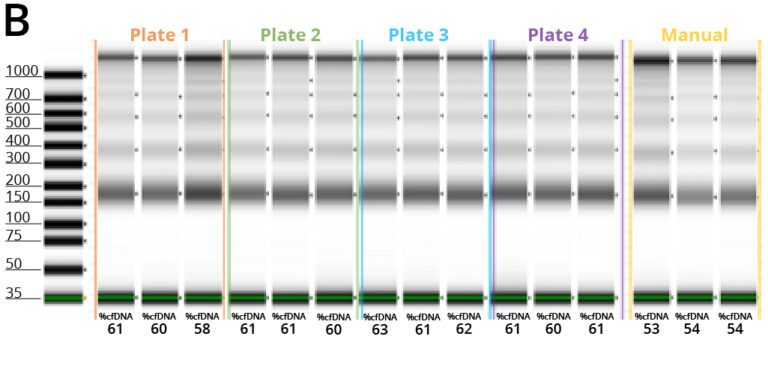
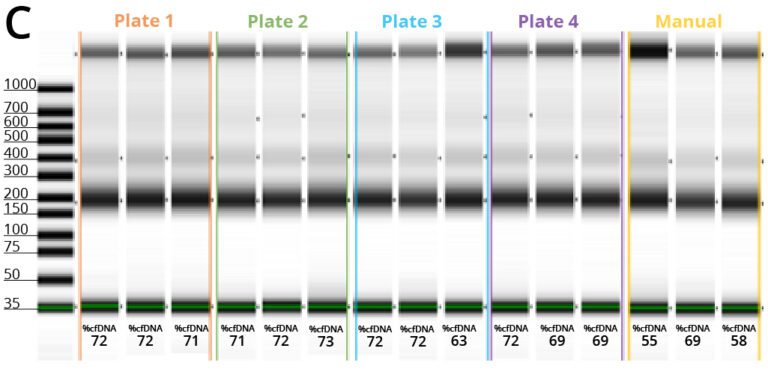
Figure 9. Cell-free DNA (cfDNA) was extracted from three 4 mL aliquots sampled from three lots of human-derived plasma (A, B, C) using the Mag-Bind® cfDNA Kit. Purification was automated across 4 plates on the Hamilton Microlab® STAR™, as well as performed manually following manufacturer’s instructions. TapeStation analysis of cfDNA extracted from each lot of plasma illustrates consistent cfDNA integrity across plates.
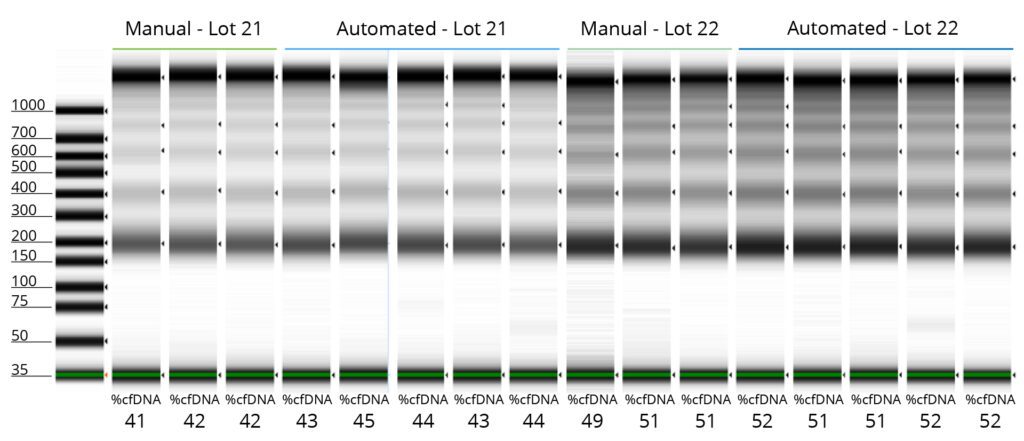
Figure 10. Cell-free DNA (cfDNA) was extracted from 4 mL human-derived plasma. Automated extraction was performed using the Mag-Bind® cfDNA Kit on the KingFisher Presto and compared to manual extraction methods. TapeStation analysis of extracted cfDNA illustrates consistent integrity between manual and automated extraction methods.
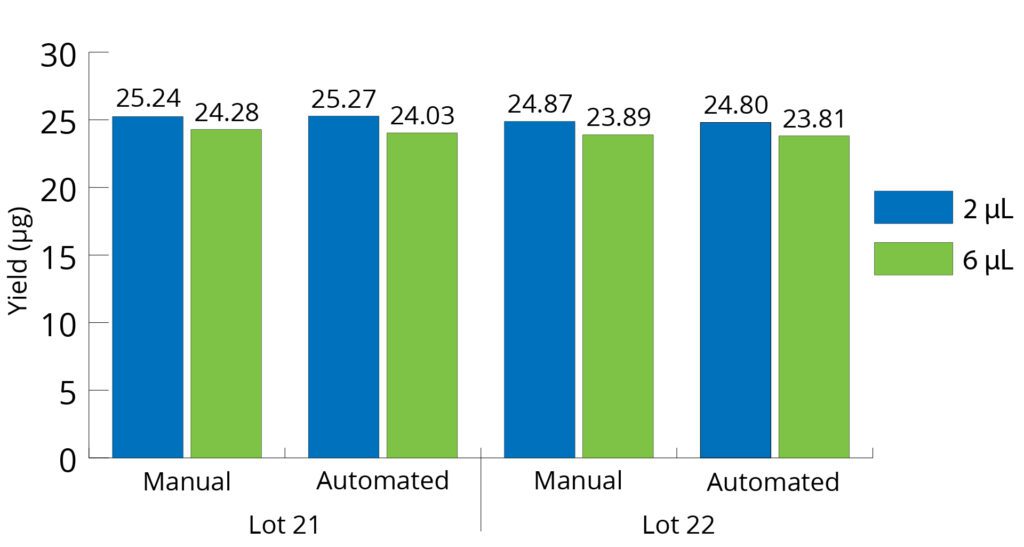
Figure 11. Cell-free DNA (cfDNA) was extracted from 4 mL human-derived plasma. Automated extraction was performed using the Mag-Bind® cfDNA Kit on the KingFisher Presto and compared to manual extraction methods. qPCR targeting RPL13a illustrated comparable downstream performance of extracted cfDNA between extraction methods.
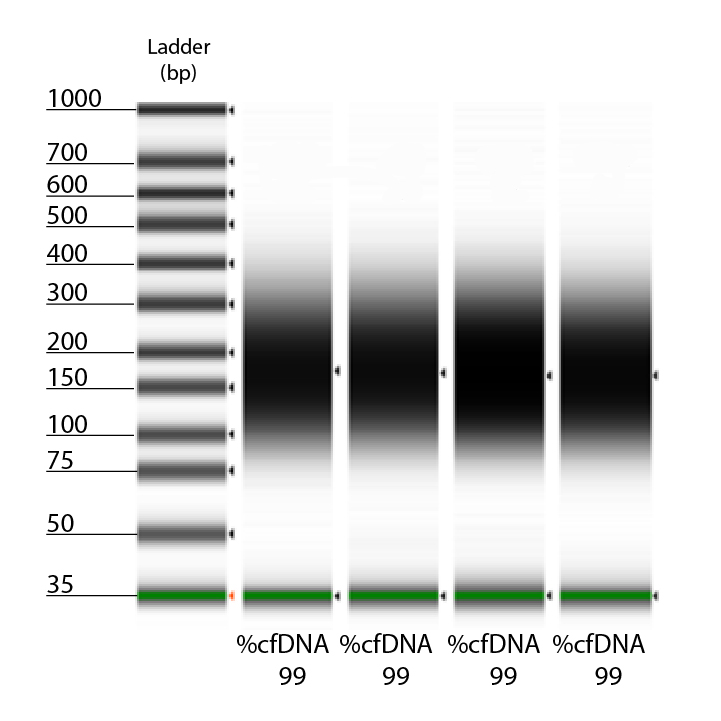
Figure 12. Cell-free DNA (cfDNA) was extracted from 4 mL of plasma using the Mag-Bind® cfDNA Kit automated on the MagBinder® Fit24 Nucleic Acid Purification System. Integrity was analyzed using Agilent’s TapeStation® 2200 and the Cell-Free DNA ScreenTape Assay. cfDNA yield, as calculated by the TapeStation® analysis software within the 50-700 bp region, ranged between 238.4 ng to 285.6 ng.
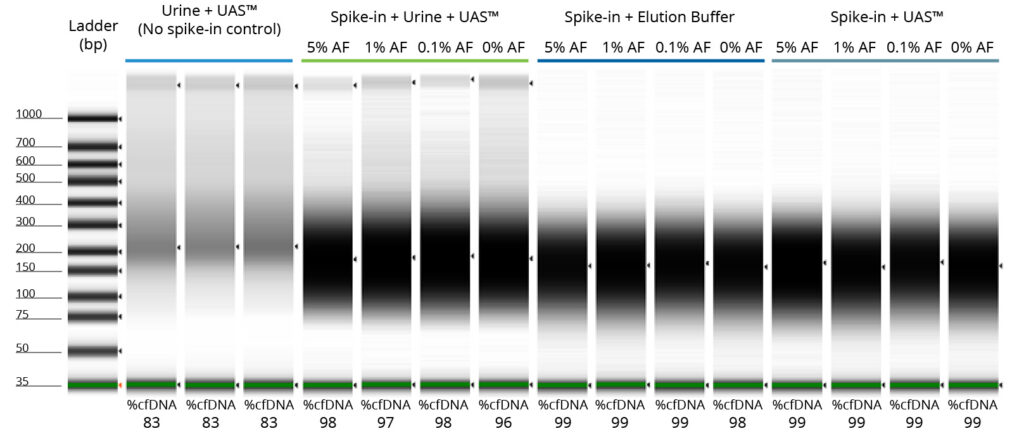
Figure 13. Evaluation of cfDNA extracted from different experimental groups using the Cell-Free DNA ScreenTape Assay
on the Agilent 4150 TapeStation system. All conditions resulted in high yields of high-quality cfDNA. AF: Allelic Frequency.
UAS: Colli-Pee™ UAS™ preservative.